

How to enjoy a vernissage, even if you know nobody
A glass in one hand, a crowd in front of the paintings and not a familiar face in sight. Here is how to relax, look properly and even talk to the artist.
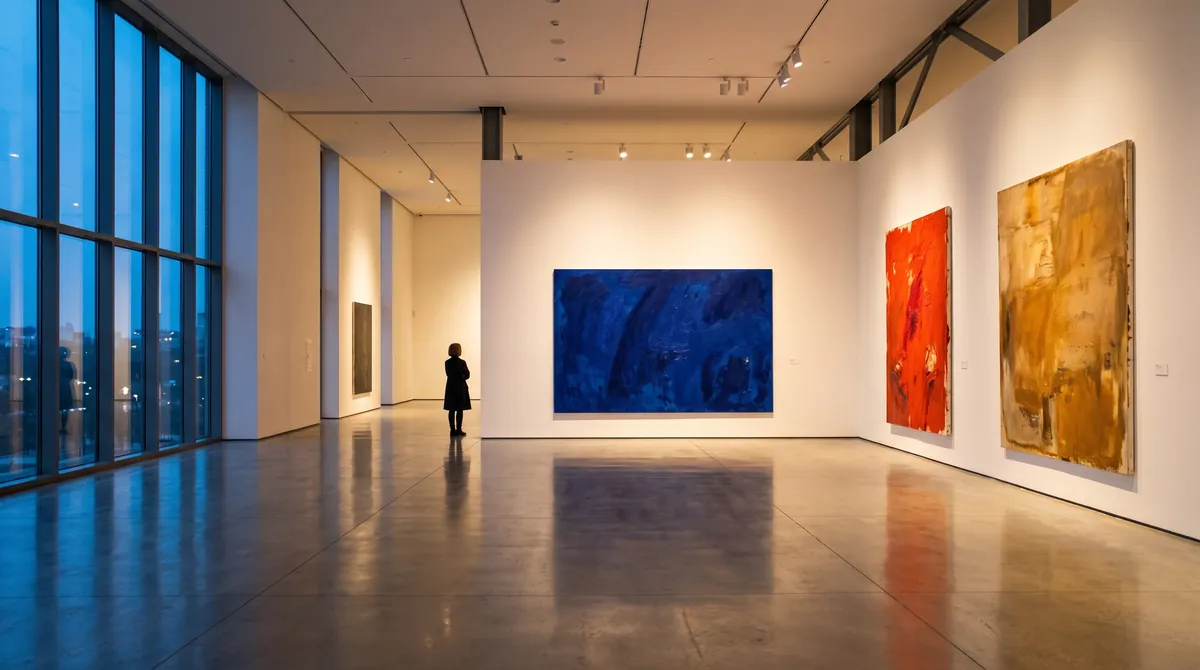
You push open a glass door into a white room full of voices. People stand in small circles, someone hands you a drink, and the paintings seem almost secondary to the conversation. If you have ever hesitated on the threshold of an exhibition opening, you are in good company. The good news is that openings are among the friendliest events in the art world, and you need no special knowledge to enjoy one.
From varnishing day to opening night
is the French word for varnishing. In the nineteenth century, at large official exhibitions such as the Royal Academy’s summer exhibition in London, artists were allowed into the galleries before the opening to varnish their paintings and add final touches on the wall. J. M. W. Turner was known for using these days to keep working on his canvases in front of his colleagues.
Patrons, critics and friends soon came along to watch, and the varnishing day turned into a social preview. Today the word simply means the opening of an exhibition. In Britain you will often hear , which traditionally means an invited preview, while the closing event on the last day of a show is called a .
Who goes, and do you need an invitation?
An opening brings together the artist and their friends and family, other artists, collectors, curators, critics, students, neighbours and people who simply saw the poster in the window. Most openings at commercial galleries, project spaces and Kunstvereine are open to anyone who walks in, even when an invitation card was sent out.
Museum openings are more often limited to members or invited guests, so check before you go. The easiest way to hear about openings is to sign up for the newsletters of places you like and to follow them online. Many cities also publish shared listings of current exhibitions.
Going alone is completely normal. Many people at an opening know only one or two others in the room, and plenty know no one at all. Give yourself a simple task: walk through the whole show once, choose a favourite work, then stand near it for a while. Someone will often start a conversation about it, and if not, you have still spent a good evening with art.
Etiquette without stiffness
There is no dress code beyond what you would wear to meet friends for a drink. A few simple habits make everyone’s evening better:
- Arrive whenever suits you; nobody notices whether you come at the start or an hour later.
- Treat the drinks as hospitality, not as a bar, and keep your glass well away from the works.
- Never touch the art, and keep a step back from works on plinths or on the floor.
- Do not stand in front of a work for long while chatting; move the conversation aside.
- Ask before photographing people, and check whether photography of the works is welcome.
- Thank the gallery staff on your way out; openings take a lot of work.
You may notice small coloured stickers beside some labels. A is the traditional sign that a work has been sold. If you want to know prices, ask for the price list at the desk; it is usually there for exactly that purpose.
Looking at art in a crowd
Openings are rarely the best moment to study a work in detail, and that is fine. Use the evening to get a first impression and to choose one or two works you would like to come back to on a quiet weekday, when you can stand in front of them as long as you like.
If the room is packed, look for the smaller works in corners, read the exhibition text, and look at how the show is hung: which works sit next to each other, and why. The Slow Looking exercise on our homepage is good practice for the quieter return visit.
Talking to the artist and the gallerist
The artist is usually the person surrounded by people and looking slightly overwhelmed. Wait for a gap, introduce yourself and say which work caught your attention. Artists generally love to hear specific reactions, far more than general praise.
Open questions work best. Ask how a series began, which material was the hardest to handle, or what the artist was looking at while making the work. There is no need to pretend you know more than you do. The gallerist, who runs the gallery and works with the artist, is just as happy to explain, and saying that you are simply looking is a perfectly good answer to any question about buying.
Artists generally love to hear specific reactions, far more than general praise.
Gallery weekends and why openings matter
In many cities, galleries coordinate their openings into a , when dozens of new shows open within a few days and visitors walk or cycle from one to the next. Gallery Weekend Berlin, started by a small group of galleries in 2005, is one well-known example, and the format has since been taken up in cities around the world. Such weekends usually come with a map of participating venues, longer opening hours and sometimes talks or tours.
For galleries, an opening is a way to celebrate the artist, bring together the people who support them and announce the show to the press and the neighbourhood. For you, it is a free, open door into a living part of the art world. Go once, then go again, and you will soon recognise faces, and some of them will recognise yours.
Terms in this article
- Vernissage
- French for varnishing; today the opening event of an art exhibition.
- Private view
- The British term for an exhibition opening, traditionally for invited guests before the public.
- Finissage
- A closing event held on the last day of an exhibition.
- Red dot
- A small sticker beside a label showing that the work has been sold.
- Gallery weekend
- A few days when many galleries in one city open new exhibitions together.
Readers ask
Do I need an invitation to go to a vernissage?
Usually not. Most openings at commercial galleries, project spaces and Kunstvereine are open to anyone, even when invitation cards are sent out. Museum openings are more often for members or invited guests. If you are unsure, check the venue’s website or social media, or simply ask at the door. Nobody will mind the question.
Am I expected to buy something?
No. Galleries are glad of every visitor, because a full room makes an opening feel alive and helps the artist. If you are curious about prices, ask for the price list, which is usually at the desk. Saying that you are just looking is a normal, friendly answer, and no one will think less of you for it.
Can I bring a friend or my children?
Yes, friends are always welcome, and bringing one can make a first opening easier. Children are welcome at most galleries too, as long as they stay close and keep their hands off the works and the plinths. For small children, the first half hour, before the room fills, is usually the most comfortable time to visit.


