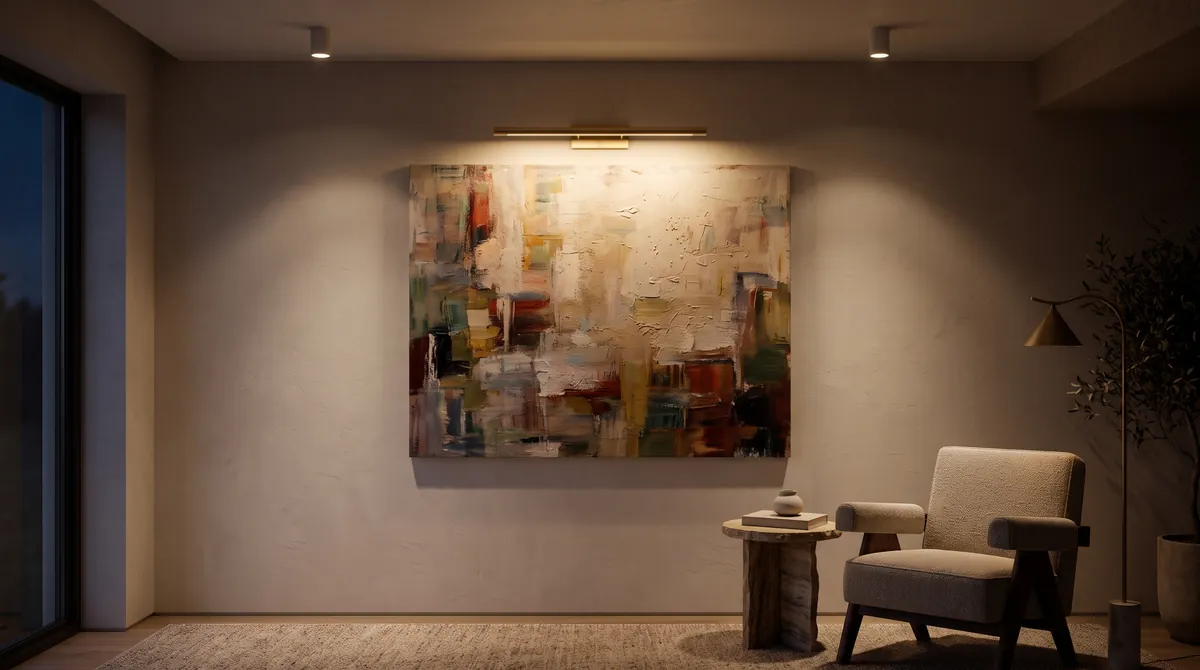
How to look at a painting, a ten minute method for slow looking
Most of us give a painting less than half a minute. Here is a simple method that turns ten unhurried minutes into the best part of a museum visit.
Try “Vermeer”, “etching”, “hanging height” or “provenance”.

Art · Aesthetics · Inspiration
An art magazine for people who love to look: the great artists and the studios of today, how art is made, where to see it, how to collect it and how to live with it.
The salon
Hung like a salon: step closer to any frame. 45 articles, 8 tools, and a growing circle of artists.


Start here
How to look, who changed art, how to buy your first work and how to hang it.
Most of us give a painting less than half a minute. Here is a simple method that turns ten unhurried minutes into the best part of a museum visit.
From a Florentine workshop to a silver studio in New York, twelve artists and the movements that link them, with an honest look at how fame in art is made.
Look a lot, set a budget, ask good questions and keep the papers. A practical walk through your first purchase, from the first gallery visit to the day the work is on your wall.
A practical guide to hanging pictures at the right height, spacing groups calmly and choosing hardware that keeps every frame safe on the wall.
One minute, one picture
Most museum visitors give a work a few seconds. Give this one a minute and see what changes. More about Slow Looking

Slow Looking
Choose a picture and a time, then press start. We will guide your eyes, one question at a time.
Tip: move your pointer over the picture, or touch and drag, to use the loupe.
Art History
From Leonardo to Warhol: lives, key works and where to see them. Open the Art Timeline




A picture gives back what you bring to it, and the most precious thing you can bring is time.
The magazine
45 articles in 6 sections. Filter by section.
From a Florentine workshop to a silver studio in New York, twelve artists and the movements that link them, with an honest look at how fame in art is made.
He changed his name dozens of times and designed one of the most reproduced images in the world in his seventies. A portrait of Hokusai and the woodblock prints that crossed the globe.
Frida Kahlo turned her own life, her body and her Mexican heritage into some of the most recognisable paintings of the twentieth century.
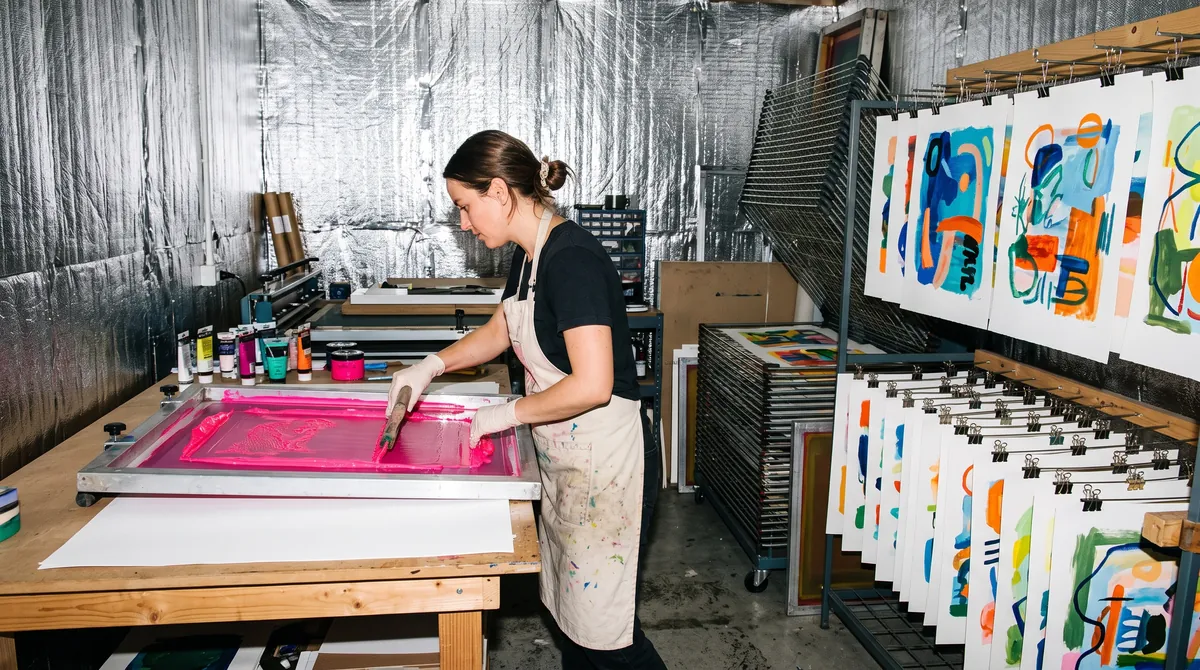
Why painters love north light, why sculptors need strong floors and why every studio is short of wall space. A look at the rooms where art is made.
Every paint is coloured powder held in a binder. Learn how egg, oil, gum and polymer shape the look of a picture, and how to tell them apart.
From earth colours to Prussian blue and the paint tube, how artists got their colours, why ultramarine was so precious and how colour contrasts work on the eye.
Gallery, Kunstverein, Kunsthalle, museum: the doors look alike, but what happens behind them differs. A clear guide to who does what, for visitors and buyers.
Behind every artwork that changes hands sits a paper trail. What provenance proves, what certificates and condition reports can and cannot tell you, and how to keep your own file.
How to choose colour temperature, beam angles and fittings so that paintings, prints and sculpture look their best at home, without fading or glare.
Painter, engineer, anatomist and serial non-finisher: how a notary’s son from Vinci left only a handful of paintings and still became one of the most famous artists in history.
From caricatures in Le Havre to the great Water Lilies in Paris: how Claude Monet spent more than sixty years chasing light, and gave a whole movement its name almost by accident.
Behind the upturned moustache and the publicity stunts stood a meticulous craftsman. Salvador Dalí’s art begins and ends on the rocky coast of Catalonia.
A studio, a room and time to think, often in another country. How artist residencies work, who chooses the artists and how you can see what they make.
Carved stone, modelled clay, cast bronze and welded steel: how sculptors choose their materials, and how a bronze is made, step by step.
Seventeen movements in one compact guide: when they happened, what they wanted, how to recognise them on a museum wall and which artists to look for first.
Heavy legs, glazed eyes, a hundred paintings and none remembered. Museum fatigue is real, and a few simple habits keep it at bay in the Louvre or the Met.
Catalogues, reserves, hammer prices and the charges that come after. How an art auction works, what you really pay and how to bid without losing your head.
Small rooms can hold big art. How to choose scale, use ledges, hallways and shelves, rotate a collection and keep works safe when space is tight.
Sculptor first, painter by obligation, architect in old age: Michelangelo worked for more than seventy years and left works in Florence and Rome that millions still queue to see.
In barely ten years Vincent van Gogh went from late beginner to one of the most loved painters in history. His letters, and his sister-in-law, explain how.
Andy Warhol took soup cans, film stars and newspaper photographs and made them into art. His questions about fame, repetition and brands have never gone away.
Plaster casts and life drawing, master classes and degree shows: how artists learn their craft, from the old academies to self-taught paths.
An original print is not a copy of a painting. Here is how the four families of printmaking work, and how to tell them apart with a simple loupe.
From Maastricht in March to Miami Beach in December, how art fairs work, when the big ones happen and how to enjoy them without sore feet.
A spiral in New York, a glass pyramid in Paris, titanium in Bilbao: a tour of museum buildings that people travel to see for their own sake.
Most damage to art at home happens slowly and is easy to prevent. What museums know about light, humidity, framing and handling, translated into a few everyday habits.
Some hotels collect, commission and exhibit art as seriously as a gallery. How to recognise them, what to ask and how to enjoy the art as a guest.
A miller’s son from Leiden who conquered Amsterdam, lost nearly everything and kept painting his own face with unflinching honesty, from confident youth to old age.
Gold leaf, flat ornament and frank portraits made Gustav Klimt the defining painter of Vienna around 1900. Here is how he got there and where to see the work.
Eight homes and workrooms, from Monet’s garden to Georgia O’Keeffe’s desert house, where you can stand in the light the artist worked in.
A clear statement, an honest CV and photographs that show the work as it really is. A practical guide for artists preparing applications and profiles.
How photographs found their way into museums, what separates a silver print from a pigment print, and why the date of a print matters as much as the date of the picture.
Pavilions in a Venetian garden, a hundred days in Kassel: how the art world’s great survey exhibitions began, how they are run and how to plan a visit.
Look a lot, set a budget, ask good questions and keep the papers. A practical walk through your first purchase, from the first gallery visit to the day the work is on your wall.
A commission gives you a work no one else owns. How to find the right artist, write a brief, agree the terms in writing and leave room for the artist’s own ideas.
For most of history, art was made for buildings. From frescoes and stained glass to Kunst am Bau and land art, how artists and architects shape spaces together.
Barely three dozen paintings, most of them small, almost all set in a few quiet rooms. How Vermeer turned window light, ultramarine and patience into some of the most loved pictures in art.
Blue, rose, Cubist, classical, political, playful: Pablo Picasso reinvented himself again and again over a working life of more than seventy years.
Once a year, many artists open the rooms where their work is made. Here is how to plan a route, behave as a guest and start a good conversation.
Most of us give a painting less than half a minute. Here is a simple method that turns ten unhurried minutes into the best part of a museum visit.
From plotter drawings in the 1960s to video, net art, immersive projections and AI, a calm guide to art made with machines and to how museums keep it alive.
A glass in one hand, a crowd in front of the paintings and not a familiar face in sight. Here is how to relax, look properly and even talk to the artist.
What 12/50, AP, HC and BAT really mean, why a low number rarely matters, and how to tell an original print from a signed reproduction.
A practical guide to hanging pictures at the right height, spacing groups calmly and choosing hardware that keeps every frame safe on the wall.
When to frame and when not to, how mats and glazing protect a work, and how to choose a frame that suits both the art and your walls.

For artists
Create a profile with your vita, images of your works and short films. Free of charge, reviewed by our editors before publication.
Tools
Word of the day
Living with art
Acid free
Describes paper, board or tissue made without acids that would yellow and weaken artworks over time.